

A journalist investigating government corruption may need to contact someone with access to confidential documents. A whistleblower exposing corporate misconduct might face serious consequences for speaking out. In both situations, protecting personal information and keeping conversations private can be extremely important.
This is one reason journalists and whistleblowers use the Tor network. Tor helps protect online privacy by routing internet traffic through multiple relays. This process hides a user’s real IP address from the websites they visit and makes tracking their online activity more difficult.
For journalists, Tor offers an additional layer of privacy when researching sensitive topics or communicating with confidential sources. Whistleblowers may also use it to share information with news organizations while reducing the risk of revealing their identities.
However, Tor isn’t a perfect solution. Understanding how it works, what it protects, and where its limitations begin is essential.
What Is the Tor Network and How Does It Work?
The Tor network is a privacy-focused system that helps people browse the internet without easily revealing their real IP addresses. Tor stands for “The Onion Router,” and anyone can use it through the free Tor Browser.
When you visit a website using a regular browser, your connection usually goes directly to that website. This can expose your IP address, which may reveal your approximate location and internet provider.
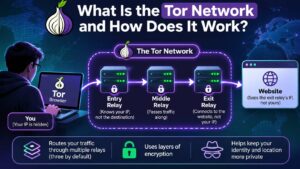
Tor works differently. Instead of connecting directly, it sends your internet traffic through three relays operated by volunteers around the world. You can learn more about this process in the Tor Project’s official guide to how the Tor network works. Each relay handles a different part of the connection.
The first relay knows your IP address but not your final destination. The middle relay passes traffic between the other two. The exit relay connects to the destination website without knowing your original IP address.
Tor also uses multiple layers of encryption to help protect information as it travels through the network.
This process makes it harder for outsiders to connect someone’s browsing activity to their identity. That’s especially useful for journalists and whistleblowers who need additional privacy when researching or sharing sensitive information.
Why Do Journalists Use the Tor Network?
Journalists often investigate stories that involve sensitive information, powerful organizations, or people who fear speaking publicly. In these situations, protecting online privacy becomes an important part of their work.
The Tor network gives journalists another way to research stories and communicate with sources while reducing unwanted tracking.
Protecting Confidential Sources
Some people share information with journalists only if their identities remain confidential. They may fear losing their jobs, facing legal consequences, or experiencing threats.
Tor helps journalists reduce the digital traces associated with online communication. This can make it harder for outside observers to identify someone through their internet connection.
However, journalists still need secure communication tools and careful practices to protect their sources.
Researching Sensitive Topics More Privately
Investigative reporting sometimes involves researching government activities, corporate misconduct, or criminal organizations.
Visiting certain websites through a regular browser can expose a journalist’s IP address to those sites. Tor helps conceal that address, allowing journalists to conduct research with greater privacy.
This protection can be particularly valuable when investigating organizations that monitor visitors to their websites.
Accessing Information in Restricted Environments
Some countries restrict access to news websites, social media platforms, and independent reporting.
Journalists may use Tor to reach information that local internet providers block. In some cases, Tor bridges can also help users connect when authorities restrict access to the Tor network itself.
These features help journalists access information and continue reporting in challenging environments.
Why Do Whistleblowers Use Tor to Share Information?
Whistleblowers often come forward with information that powerful organizations would prefer to keep private. This might involve government corruption, financial fraud, workplace misconduct, or other serious wrongdoing.
Sharing such information can carry real consequences. Some whistleblowers risk losing their jobs, facing legal pressure, or becoming targets of harassment. That’s why protecting their identities can be especially important.
Reducing the Risk of Being Identified
When someone contacts a journalist online, their internet connection may leave behind identifying information. Websites can record IP addresses, while other digital records may reveal details about their activities.
Tor helps reduce some of these risks by hiding the user’s real IP address from the websites they visit.
However, Tor cannot remove every digital trace. Documents, personal accounts, and workplace monitoring systems may still reveal someone’s identity. Even seemingly harmless images can reveal personal details. For example, hidden information in shared photos may expose location data or other clues that could help identify someone.
Communicating With Journalists More Privately
Whistleblowers sometimes need a way to contact reporters without immediately revealing who they are.
Tor can help them access privacy-focused communication services, including anonymous submission platforms operated by news organizations.
For example, SecureDrop allows sources to send messages and documents to participating newsrooms through Tor.
These tools provide an additional layer of protection, but careful handling of sensitive information remains essential. Even a small mistake can compromise someone’s anonymity.

How Do Journalists and Whistleblowers Communicate Through Tor?
Journalists and whistleblowers need more than a private internet connection when sharing sensitive information. They also need reliable ways to exchange messages and documents without unnecessarily exposing their identities.
Several news organizations use specialized tools that combine Tor’s privacy features with additional security protections.
What Is SecureDrop and How Does It Work?
SecureDrop is an open-source system that helps journalists receive confidential information from anonymous sources. News organizations can operate their own SecureDrop platforms to collect messages and documents securely.
A whistleblower can access a participating newsroom’s SecureDrop page using Tor Browser. From there, they can submit information without creating a traditional account or providing an email address.
SecureDrop encrypts submissions and gives sources a unique code they can use to check for replies. Journalists follow separate security procedures to review messages and download files.
This approach reduces the amount of identifying information involved in the communication process.
Why Some News Organizations Use Onion Services
An onion service is a website or online service that people access through the Tor network. Its address ends in .onion instead of a familiar extension like .com.
Unlike ordinary websites accessed through Tor, onion services don’t require an exit relay. The connection stays within the Tor network, helping protect both the visitor’s location and the service’s IP address.
News organizations use these services to provide more private access to submission platforms such as SecureDrop.
However, Tor alone cannot guarantee anonymity. SecureDrop adds safeguards for handling sensitive submissions, while journalists and sources must still follow careful security practices.
Real-World Examples of Tor in Investigative Journalism
Tor isn’t just a privacy tool for individuals. Several major news organizations use it to help protect people who share confidential information.
One example is ProPublica, an American nonprofit newsroom known for investigative reporting. In 2014, ProPublica introduced SecureDrop to help sources submit sensitive documents through the Tor network. The organization also operates an onion website that allows readers to access its reporting more privately.
The Guardian offers another example. The British newspaper launched its SecureDrop service in 2014, giving whistleblowers a way to share documents without using traditional email. Sources can also receive replies from journalists without providing their names.
The Washington Post uses SecureDrop for similar reasons. Its system allows people to send messages and files through Tor while reducing the identifying information associated with their submissions.
These examples show how established newsrooms have incorporated Tor into their reporting practices.
Of course, using Tor doesn’t guarantee complete anonymity or prove that a particular investigation involved anonymous submissions. However, these systems give journalists and potential sources another way to communicate when privacy matters most.
Can Tor Completely Protect Journalists and Whistleblowers?
Tor provides valuable privacy protections, but it cannot guarantee complete anonymity. While the network helps hide someone’s IP address, other factors can still expose their identity.
For journalists and whistleblowers, understanding these limitations is just as important as knowing how Tor works.
Mistakes That Can Reveal Someone’s Identity
Even when using Tor Browser, certain online activities can reveal personal information.
For example, logging into a personal email or social media account can connect browsing activity to a known identity. Sharing documents without checking their contents can also create problems.
Files may contain hidden details, such as author names, editing history, or information about the devices that created them.
Someone might also reveal their identity by mentioning personal experiences or sharing details that only a few people know.
Why Tor Alone Cannot Guarantee Anonymity
Tor protects certain parts of an internet connection, but it cannot control everything that happens on a user’s device.
Malware, compromised computers, and unsafe software can expose sensitive information despite Tor’s protections.
Network monitoring and sophisticated traffic analysis may also create risks, particularly when an adversary can observe multiple parts of a connection.
For additional guidance on protecting sensitive information, the Electronic Frontier Foundation offers a practical Surveillance Self-Defense guide covering digital privacy and security.
Using secure communication platforms, protecting devices, and carefully reviewing sensitive information can help reduce additional risks.

How Can Journalists and Sources Use Tor More Safely?
Tor can improve online privacy, but the way someone uses it matters just as much as the technology itself. Journalists and confidential sources should follow a few basic security practices to reduce unnecessary risks.
Download Tor Browser from the official website. The safest place to get Tor Browser is the Tor Project’s official website. Avoid downloading modified versions from unfamiliar websites, as they may contain harmful software.
Keep your browser and devices updated. Software updates often fix security weaknesses that attackers could exploit. Regular updates help protect your device and personal information. Keeping accounts secure matters, too. Understanding how hackers steal passwords can help journalists and confidential sources recognize phishing attempts and other threats to their accounts.
Follow the newsroom’s submission instructions. News organizations that operate SecureDrop usually provide specific guidance for contacting journalists. Read these instructions carefully before sending messages or documents.
Avoid using personal accounts. Logging into your regular email or social media accounts can reveal your identity, even when you’re connected through Tor.
Review documents before sharing them. Files may contain author names, location details, or other identifying information. Remember that removing visible details doesn’t always eliminate hidden metadata.
Understand what Tor cannot protect. Tor helps protect network privacy, but it cannot prevent every security threat. A compromised device or careless disclosure can still expose sensitive information.
For anyone handling confidential material, combining Tor with careful security habits offers stronger protection than relying on one tool alone.
Frequently Asked Questions
1. Is Using Tor Legal for Journalists?
Yes. Using Tor is legal in the United States and many other countries. Journalists can use it for private research and communication. However, some countries restrict Tor access, so local laws may differ.
2. Can Someone Trace a Journalist Using Tor?
Tor makes tracking more difficult, but it doesn’t guarantee anonymity. Personal account logins, malware, or identifying information in shared documents can still expose someone’s identity.
3. Do All Whistleblowers Need Tor?
No. Not every whistleblower needs Tor. The right privacy tools depend on the situation, the information involved, and the potential risks of revealing their identity.
4. Is SecureDrop the Same as Tor?
No. Tor is a network that helps protect online privacy. SecureDrop is a separate system that uses Tor to help news organizations receive confidential messages and documents from anonymous sources.
Why Tor Matters for Press Freedom and Privacy
Independent journalism often depends on people who are willing to share information that others would rather keep hidden. Without reliable ways to protect their identities, some sources might never come forward.
The Tor network helps journalists research sensitive topics and communicate with confidential sources more privately. It also gives whistleblowers another way to report wrongdoing while reducing certain risks of identification.
Of course, Tor cannot eliminate every privacy or security threat. Still, when combined with responsible security practices, it can play an important role in protecting sources and supporting press freedom.
Ultimately, protecting confidential communication helps important stories reach the public.